Designers & Manufacturers
Pretty flexible


The LEVI table frame is a new product from MAGAZIN —and a true master of transformation that can be quickly stowed away and feels right at home in a wide variety of roles. The frame was developed by two up-and-coming designers.
Text: Jochen Overbeck
Photos: Michael Tewes

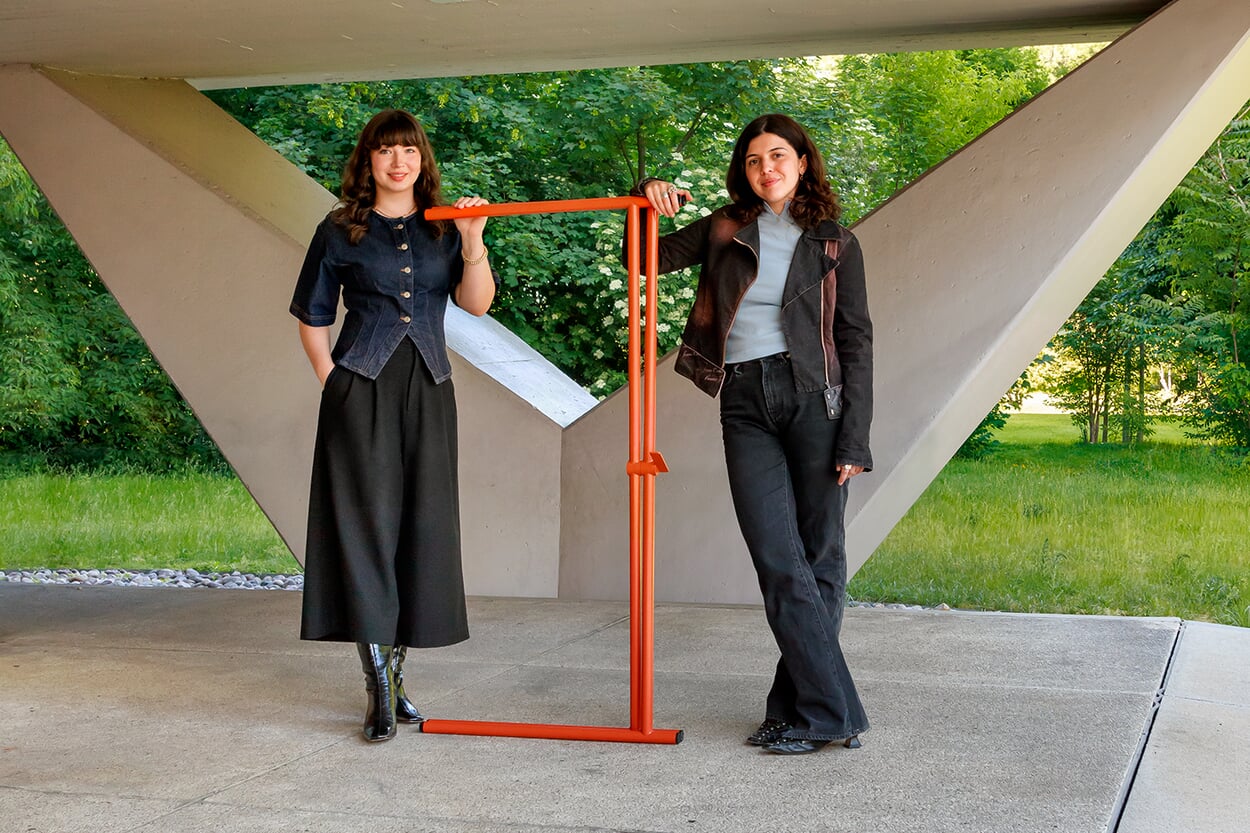
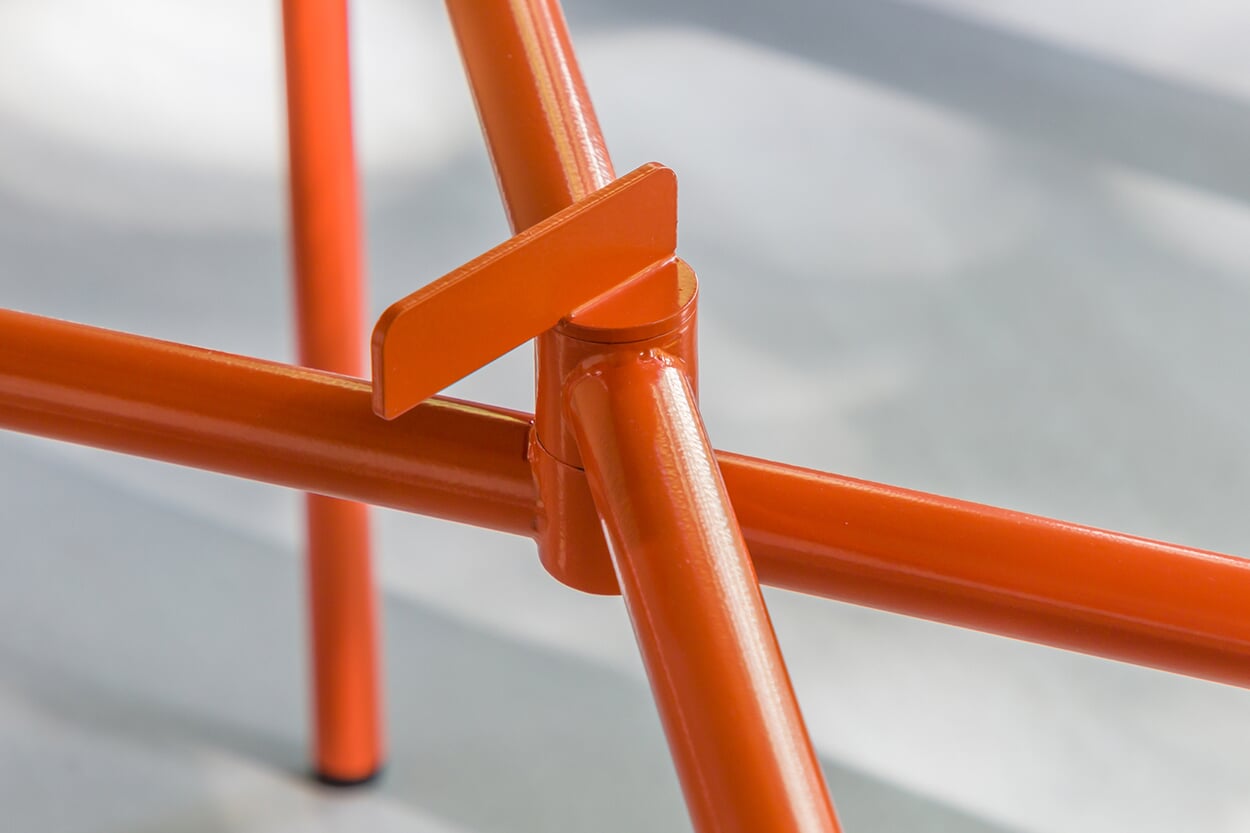
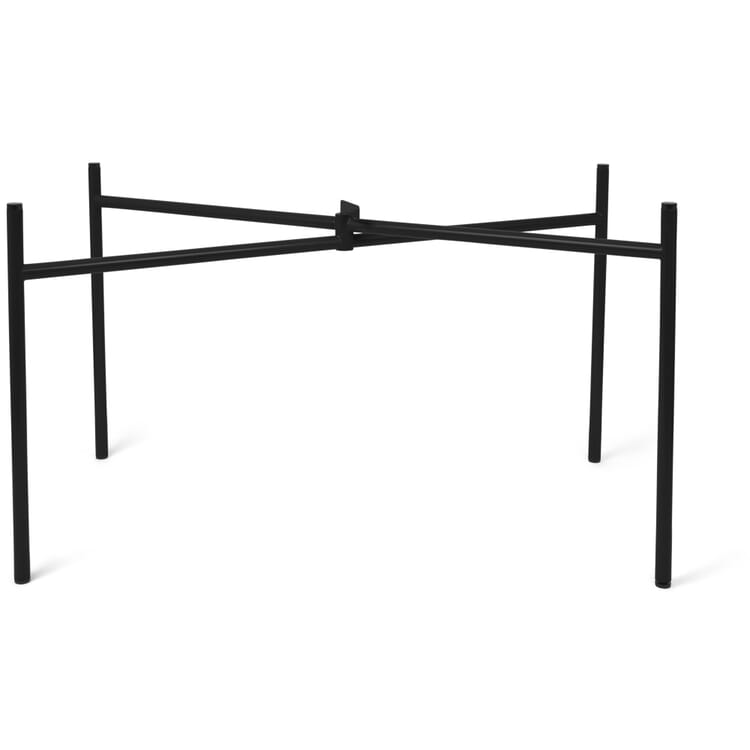
“When we looked at the current state of the market, we were surprised to find that nothing like this existed yet,” says Marie Kurstjens as she taps one of LEVI’s legs in a friendly manner. LEVI is a table frame with crossed struts and a new addition to the collection of “ MAGAZIN ” products. The collaborative project by Marie Kurstjens and Iva Coskun achieves its aesthetic beauty through minimalism. The key feature isn’t immediately apparent—yet it’s the central element of the piece: the cross-braced frame has a hinge where the two rods meet. This means LEVI’s width and span can be adjusted to accommodate tabletops of various sizes. And when folded completely flat, it can even fit behind a door. LEVI was created in 2019. Kurstjens and Coskun studied product design at the Bauhaus University in Weimar. In their second semester, the theme was “Workplace.”

The question: What must a table be capable of when used in settings where configurations change—where things are taken apart, put together, or modified? The two quickly realized that while the university had nice desks, However, they offered little flexibility and could hardly be adapted to different work and presentation situations. “We quickly figured out the principle behind the joint,” says Coskun. Working in the workshops was the real hurdle. “Building the frame on a one-to-one scale required a lot of testing, adjusting, and optimizing. The principle was clear, but the design was developed and refined as we went along.” Added to this was the experience that young women are not always taken seriously in workshops, which presented additional challenges during the development process. That same year, Iva Coskun and Marie Kurstjens entered the “Pure Talents Contest” at the Cologne Furniture Fair.

The fact that they—the only all-female team and by far the youngest participants—emerged as the winners of the young designers’ competition still seems to genuinely surprise them today—and delight them. All the more so because the table frame is now going into production, albeit with a delay caused by the pandemic. For both of them, this is their first furniture design—but they take a broader view of design. Kurstjens focuses primarily on social design and was named “Newcomer of the Year” at this year’s German Design Award; for her master’s thesis at the Berlin University of the Arts, she developed “Designing Dignity,” a modular system for menstruating people seeking refuge. Coskun will soon complete her master’s degree, also at the Berlin University of the Arts. In her thesis “Ornaments of Care,” she examines the marginalization of ornamental practices. She advocates for the increased incorporation of ornamentation—which has a negative image in modern design discourse—back into product design.
LEVI Table Frame

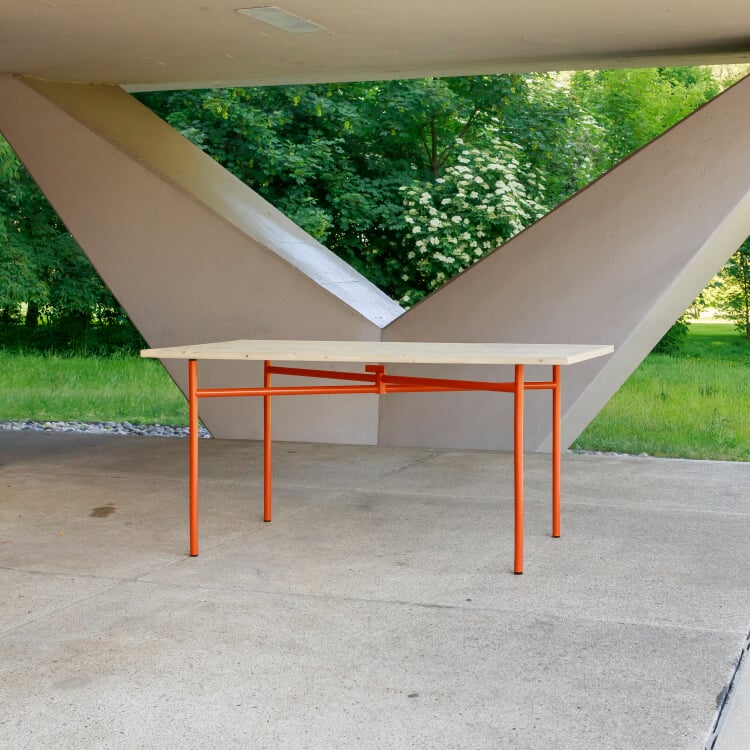
Levi Table Frame", RAL 2001 Red orange
LEVI is the Latin word for “light” and, in this case, refers both to its light weight and the ease of use that results from it. Whether used as a desk in the office, a dining table in the living room, or as a quick-to-set-up side table anywhere, LEVI can be combined and used with round, rectangular, and square tabletops. Practical: Unlike other frames, the cross-shaped arrangement of the legs ensures the same amount of legroom all around. And if you like to put your feet up every now and then, simply turn LEVI upside down and use the cross at the bottom for that purpose.
Related items:











Read more
Reusing and upgrading old light fixtures: Interior designer Sabine De Schutter is an expert in circular lighting. In this interview, De Schutter talks about cheap, poorly made products and why true sustainability goes far beyond energy efficiency.
After more than thirty years as an independent designer, Konstantin Grcic has moved into manufacturing with the brand 25kg. We spoke with Grcic about his fascination with industrial processes, the eye of MAGAZIN, and why he doesn’t have scratches and discoloration removed from 25kg products.
Buildings as raw material warehouses and furniture for rent: Thinking about architecture and design within the context of the circular economy leads to new, unconventional solutions. The question remains whether circular design is also economically viable in the long term—and aesthetically compelling.