Designers & Manufacturers
“CIRCULARITY IS A GREAT OPPORTUNITY”


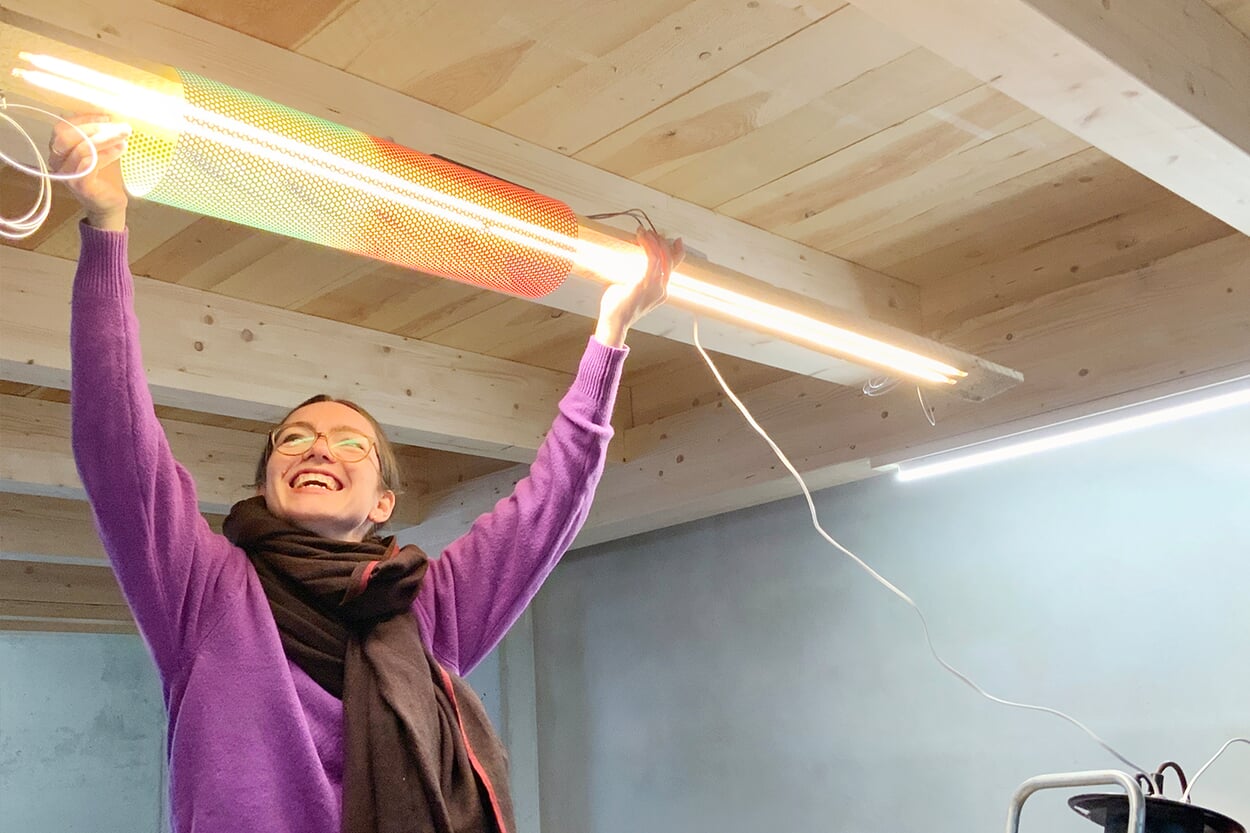
Reusing and upgrading old light fixtures: Interior designer Sabine De Schutter is an expert in circular lighting. With her Berlin-based lighting design firm, Studio De Schutter, she develops innovative lighting concepts—with the goal of preventing waste and keeping resources in circulation for as long as possible. In this interview, De Schutter talks about cheap, poorly made products and why true sustainability goes far beyond energy efficiency.
Interview: Katharina Rudolph

Ms. De Schutter, how does circular lighting design work?
For new projects, we first check which fixtures a customer—who, for example, wants to move from an old location to a new one—already has in their inventory. Then there are various strategies: Existing fixtures are reused as-is, retrofitted, or resold. Sometimes we also return them to the manufacturer.
Isn’t it unusual for companies to take back their products?
Yes, so far that’s the exception. Many companies are focused on the traditional sales model; circular approaches are still uncharted territory. But more and more manufacturers are moving in this direction.
Can all old light fixtures be retrofitted?
Many light fixtures from the early days of LED technology—roughly between 2008 and 2015—pose problems. They were often permanently glued in place, making it nearly impossible to access the components. On top of that, the light quality is often poor. Fixtures from before the advent of LED technology, on the other hand, are much easier to upgrade; traditional systems with fluorescent tubes or halogen bulbs usually have standardized sockets and interchangeable components. For an office in Düsseldorf, we retrofitted existing fixtures with LEDs and new control technology. Previously, the lights there could only be turned on or off; now, various lighting scenes can be activated at the touch of a button.

Aren’t LEDs still often glued in place these days?
They are. But many major manufacturers now also offer LED systems with replaceable components. This costs a bit more, but makes the products easier to repair. That’s exactly where the current discussion about the European “Right to Repair” comes in: In the future, products should be easier to repair and thus usable for the long term.
Is sustainable lighting inevitably more expensive?
In the short term, usually yes. Converting existing fixtures, for example, is labor-intensive and therefore more expensive than buying new, glued-together cheap products. In the long term, however, this is put into perspective. Especially in dynamic sectors like offices or the restaurant industry, uses often change after just a few years. A light fixture, however, often has a lifespan of about 15 years. So why dispose of it after five years? That’s a huge waste of materials!
Is sustainability in the lighting industry often oversimplified? Think “greenwashing” …
You have to look closely at manufacturers. For a long time, the assumption was: LED = sustainable. But people often forget that the production of LEDs and electronic components is resource- and CO2-intensive. Smart lighting systems are also often marketed as sustainable solutions because they can save energy. However, a highly complex control system that becomes obsolete or needs to be replaced after just a few years isn’t automatically sustainable simply because it saves electricity. Greenwashing occurs when the focus is solely on energy efficiency and not on a product’s life cycle: Where do the materials come from? Can components be repaired or replaced? How long will the system remain usable?

You work a lot with daylight analyses. Does that play a role in terms of circularity?
Yes, for a coworking space in Berlin, we analyzed how light is distributed throughout the room over the course of the day. From this, we determined when and where additional artificial lighting is needed. We then installed the appropriate electrical circuits and timers in the hallways. This ensures that only as much light is turned on as is currently needed.
What is currently still holding back circular lighting design?
Warranties are a major hurdle. There’s a difference between a light fixture that’s brand-new from the factory and one that’s been retrofitted. How is the retrofitted fixture certified, and who is liable? Added to this are questions of availability: You often don’t know whether you’ll find suitable fixtures or how complex the retrofit will be.
And what opportunities do you see?
A major opportunity lies in greater transparency. With digital product passports, it will be possible in the future to trace which materials and components are used in a luminaire, how repairable it is, and what its carbon footprint is over its lifecycle. At the same time, there is enormous potential in the intelligent further development of lighting fixtures. The retrofits we’re planning are usually not standardized mass-production processes, but rather customized solutions. That’s precisely where a major opportunity lies—and it’s a great one for the skilled trades!
Sabine de Schutter

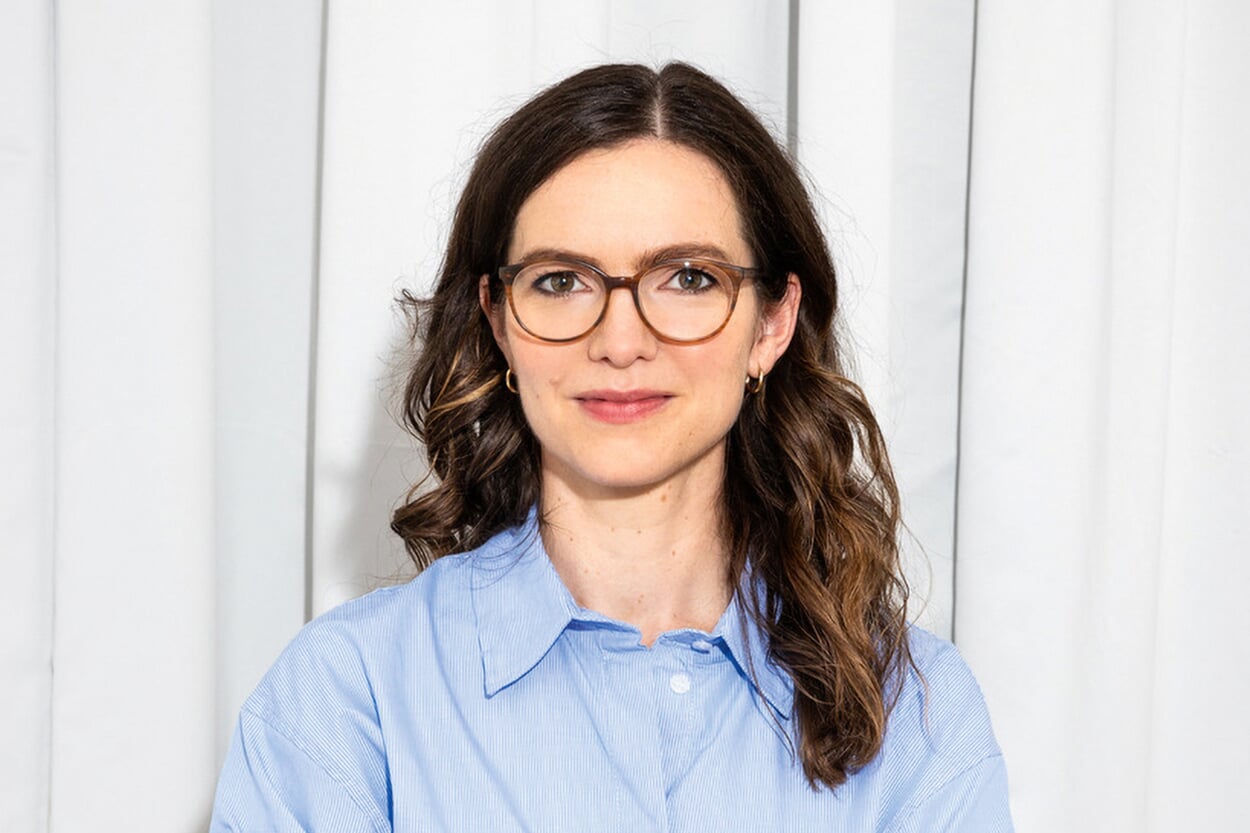
Sabine De Schutter, a native of Belgium, studied interior design in Antwerp and Barcelona, as well as architectural lighting design at Wismar University of Applied Sciences. In 2015, she founded the lighting design firm Studio De Schutter, with offices in Berlin and Antwerp. She takes a holistic approach to sustainability, focusing on durable, repairable, and flexibly adaptable solutions. Sabine De Schutter teaches at the HPI d-school at the Hasso Plattner Institute in Potsdam and at Wismar University of Applied Sciences, among other institutions.
Images: Sabine De Schutter, Florian Reimann
Read more
Buildings as raw material warehouses and furniture for rent: Thinking about architecture and design within the context of the circular economy leads to new, unconventional solutions. The question remains whether circular design is also economically viable in the long term—and aesthetically compelling.
After more than thirty years as an independent designer, Konstantin Grcic has moved into manufacturing with the brand 25kg. We spoke with Grcic about his fascination with industrial processes, the eye of MAGAZIN, and why he doesn’t have scratches and discoloration removed from 25kg products.
From a craft workshop to an industrial enterprise: Julius vom Hofe, based in Lüdenscheid, manufactures sheet-steel storage systems that reflect the high standards of the company’s origins as an artistic blacksmith’s shop.